The five phases
A trip is five different jobs, in order.
The trip's own navigation changes as the dates move. This one is in its Wrap week, so what is left is who owes who.


- Plan
- Ideas, requests and build status while the trip takes shape.
- Prep
- Readiness, deposits and arrival times in the run-up.
- Live
- Today's run of show while you are on the ground.
- Wrap
- Who owes who, settled by hand, recorded here.
- Archive
- The recap, kept, and the next trip when you want it.
The split
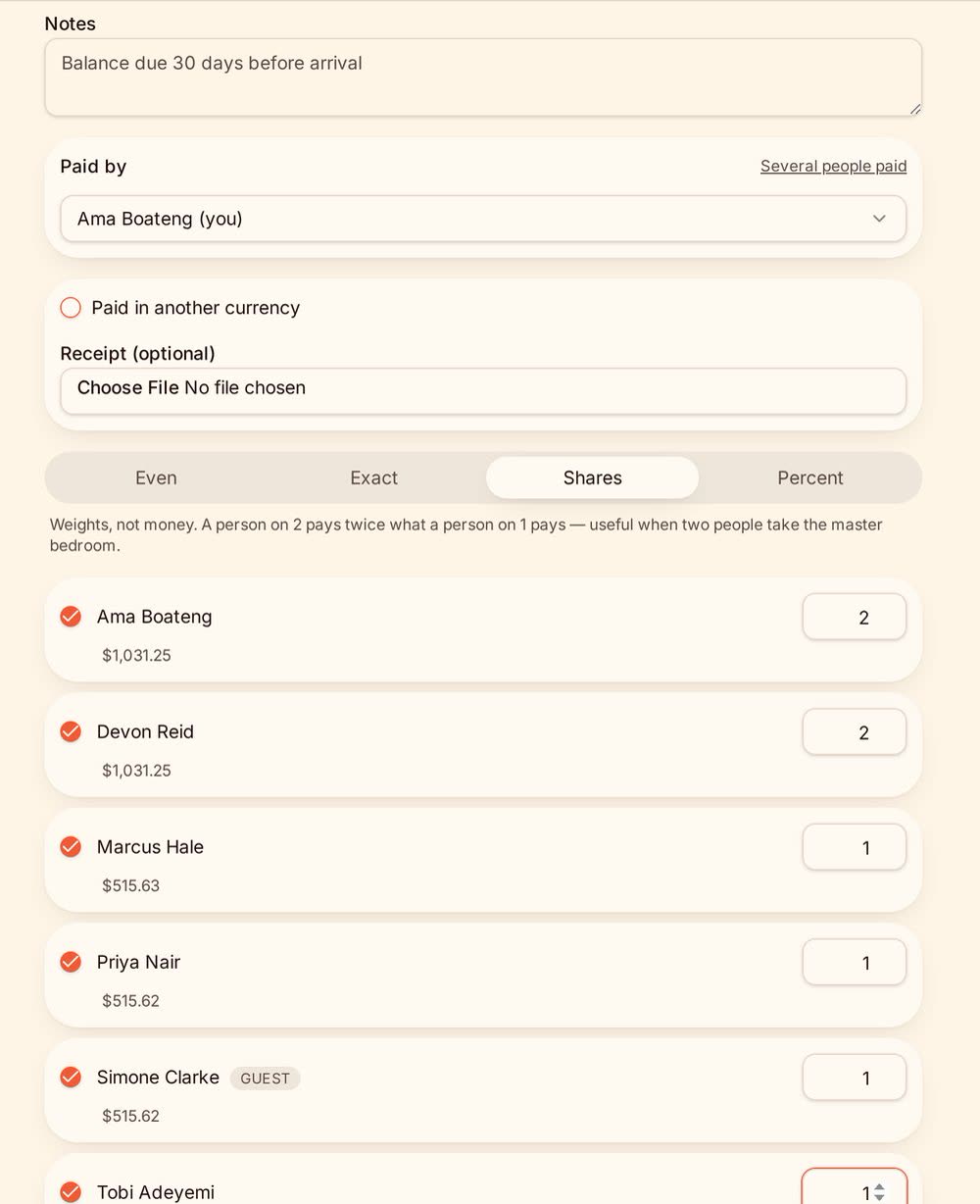
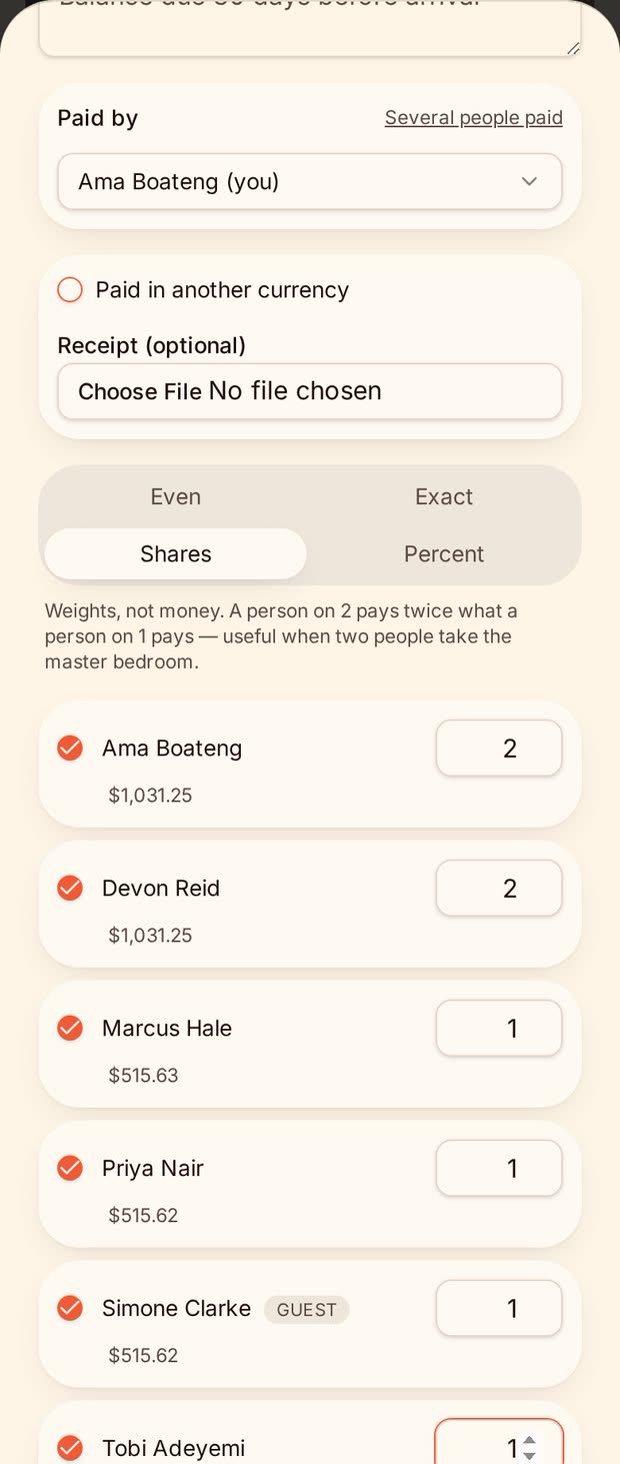
Two people took the master bedroom, so they pay twice.
Split evenly, by exact amounts, by shares or by percentage. Everyone's figure moves as the weights move, guests included, before anything is saved.
Settling up
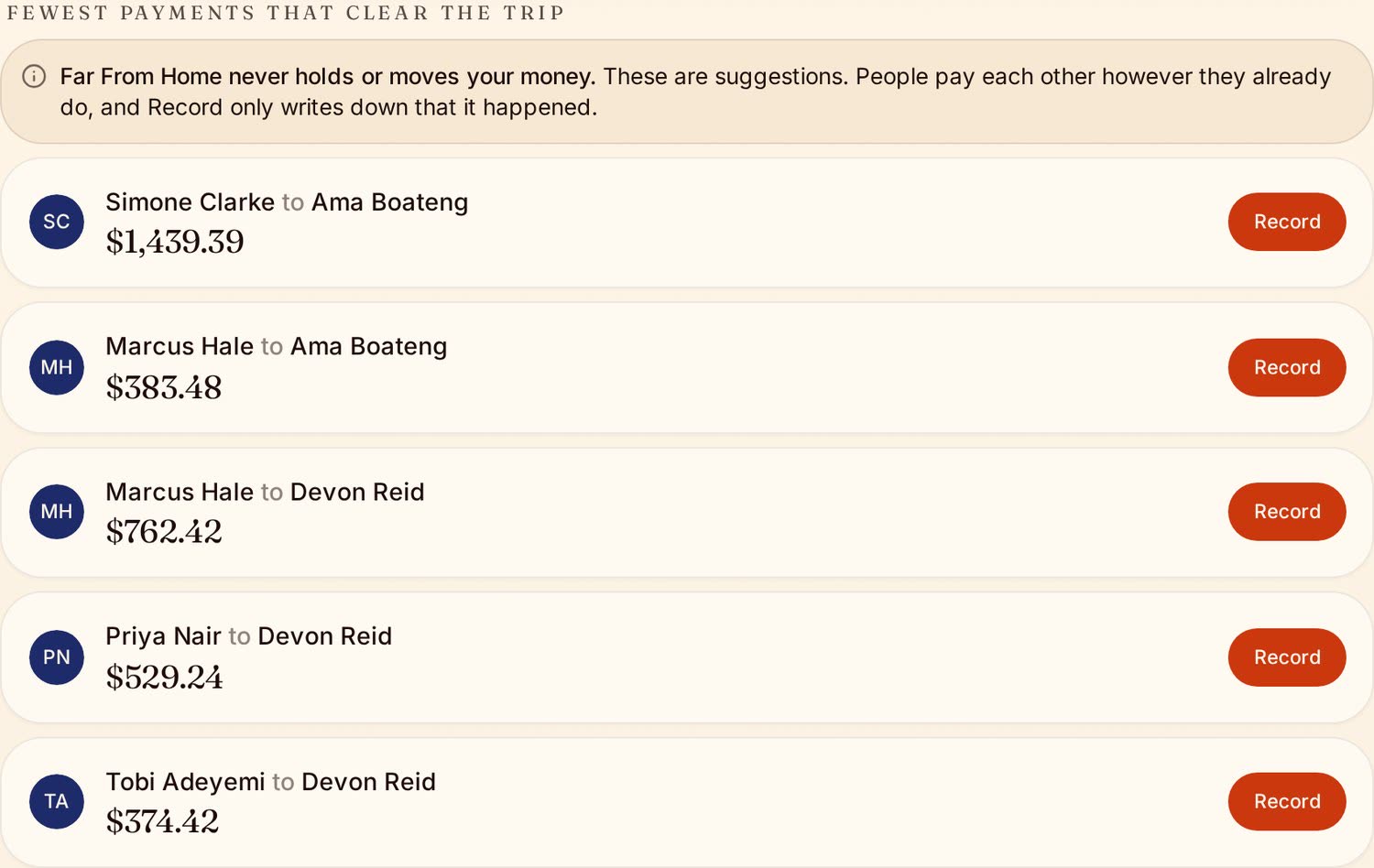
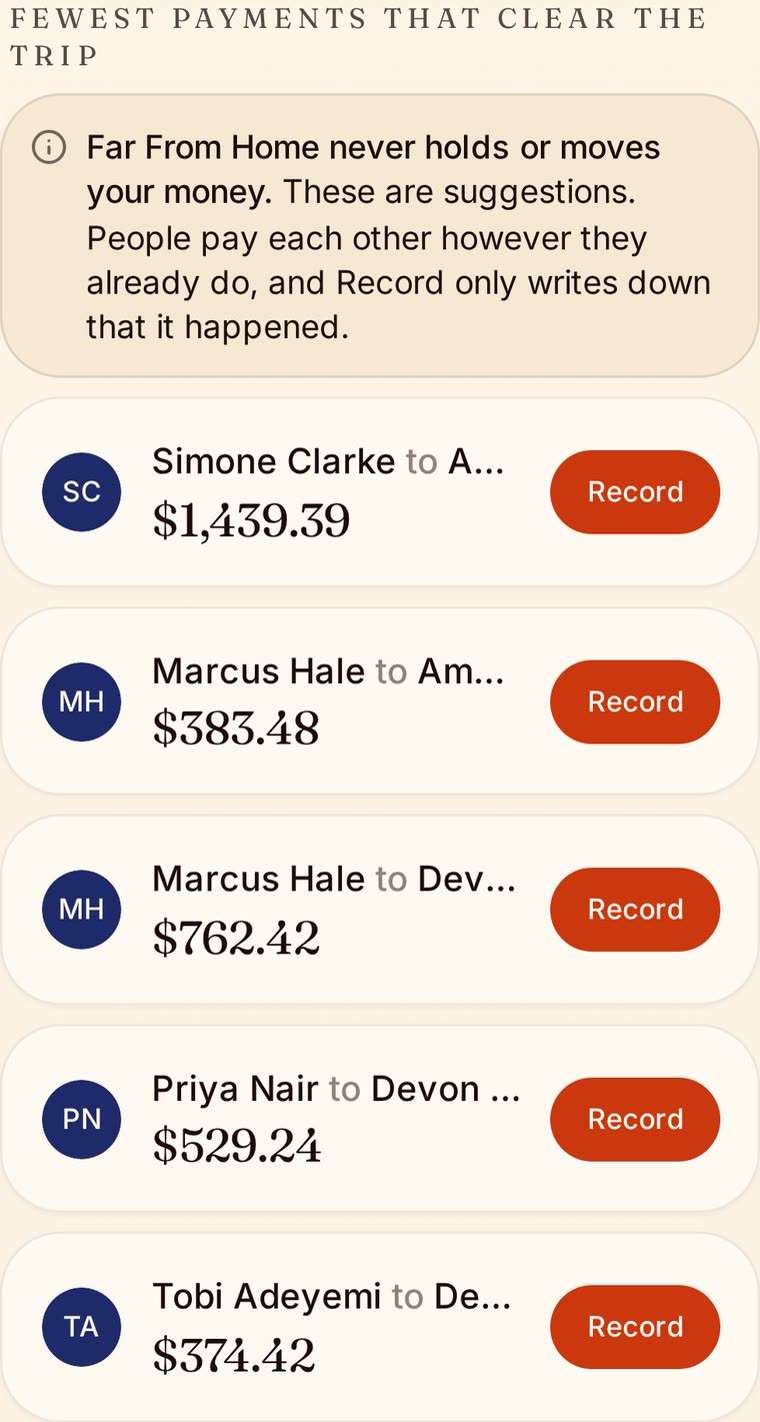
The debts between six people become the fewest transfers that clear them.
People send those transfers to each other however they already pay each other, and mark them done. Far From Home never holds or moves money.

Cape Town, February
Somebody who has been there decides what the Tuesday is.
The itinerary
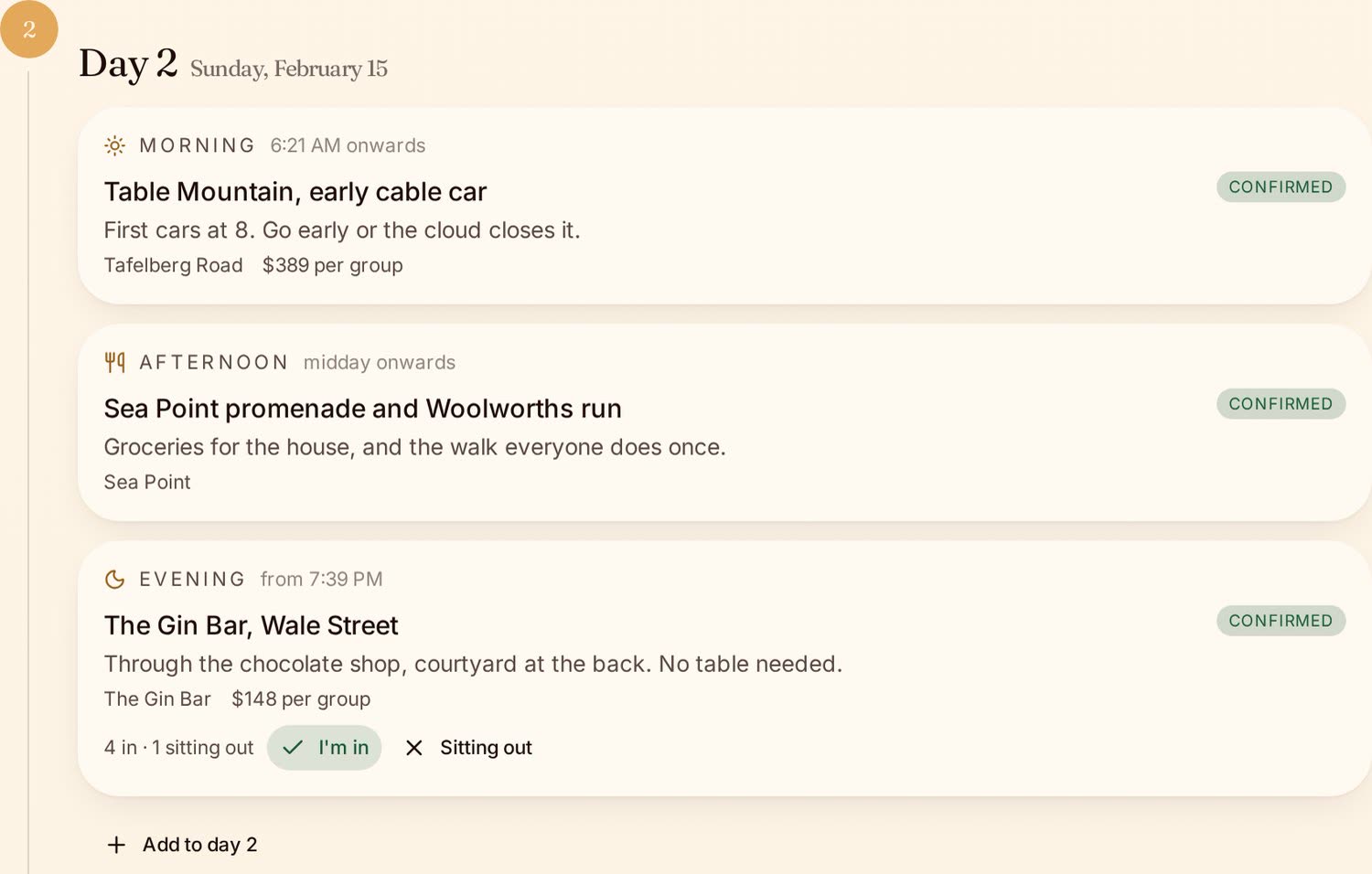
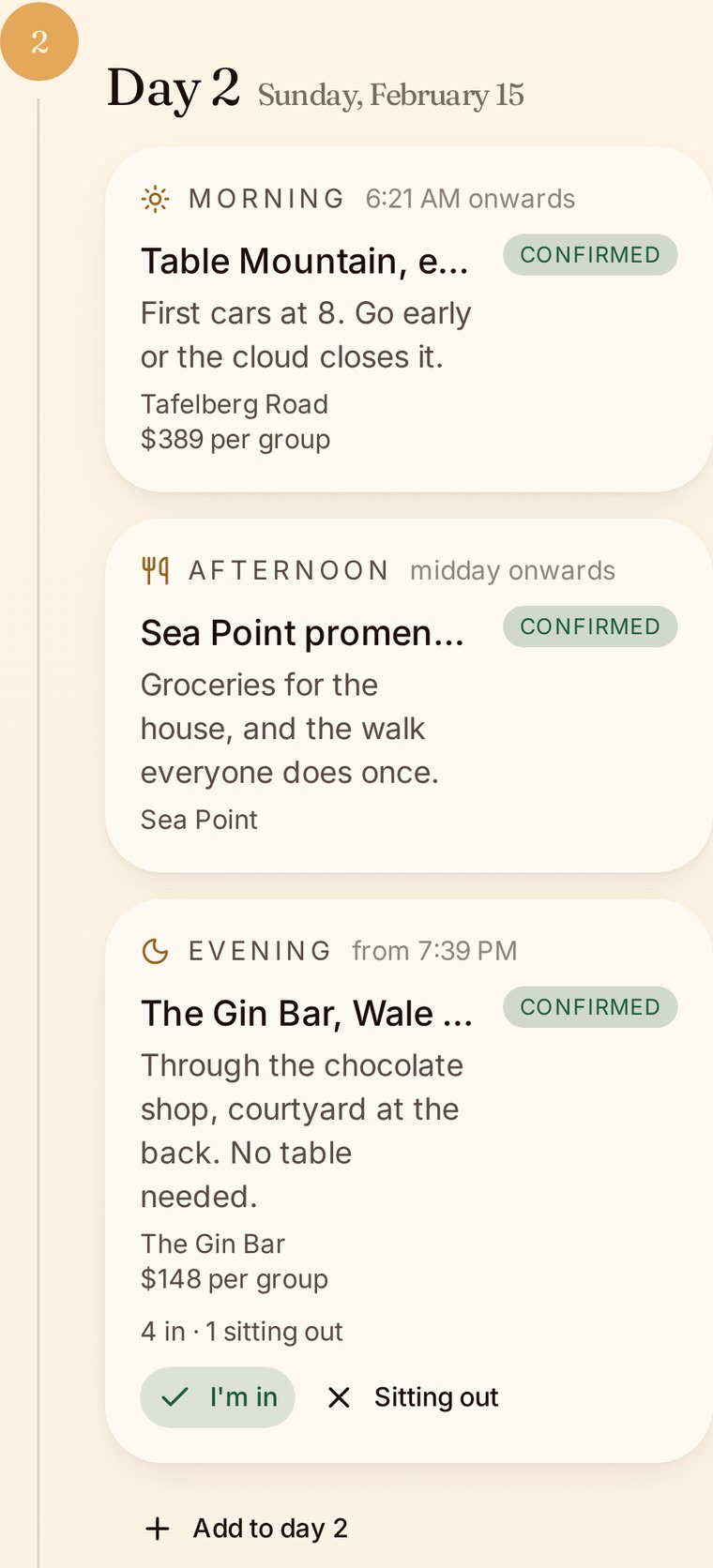
A day with times, notes and who is coming.
Built in the app, and still editable by the crew afterwards.
The delivered document
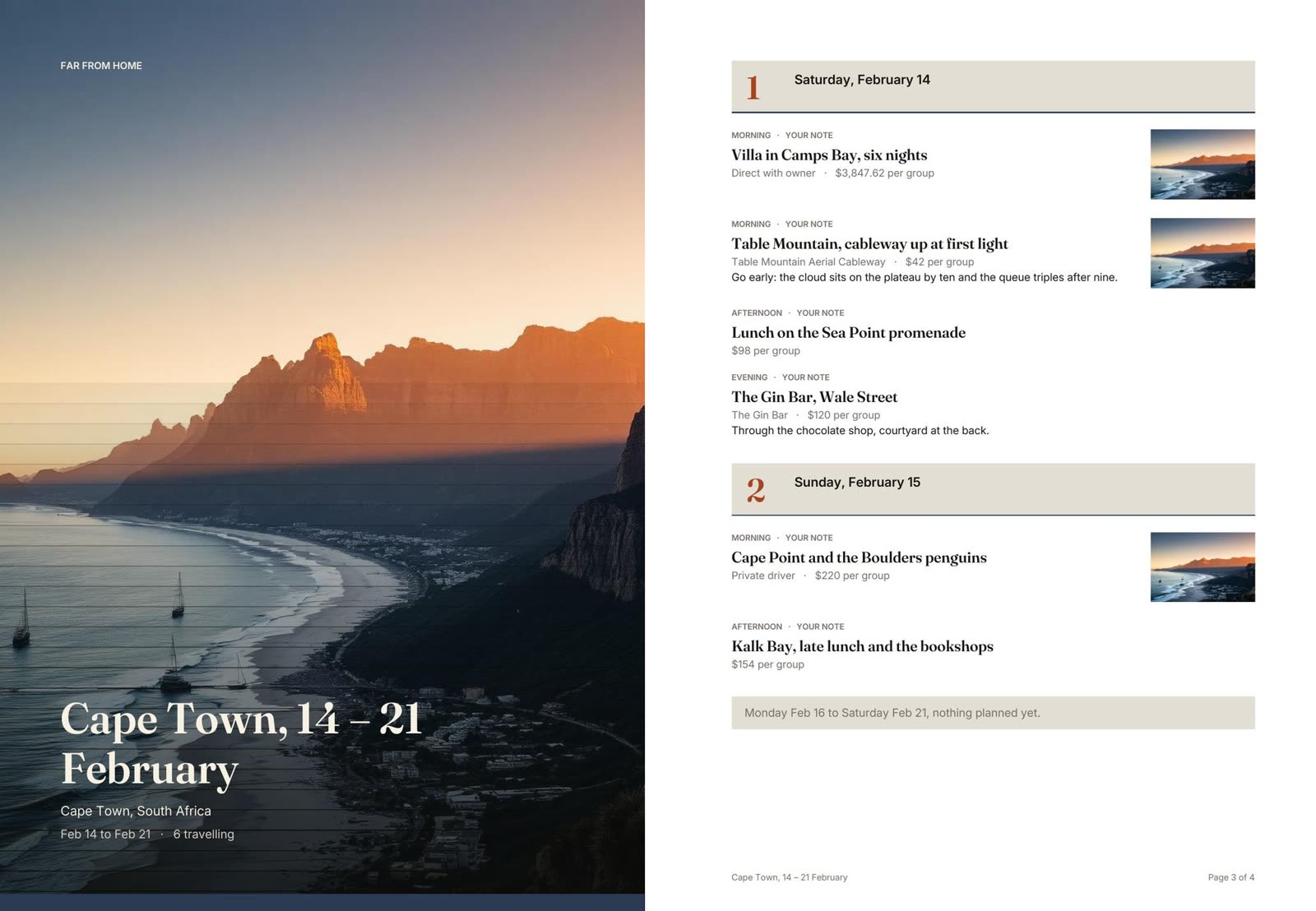
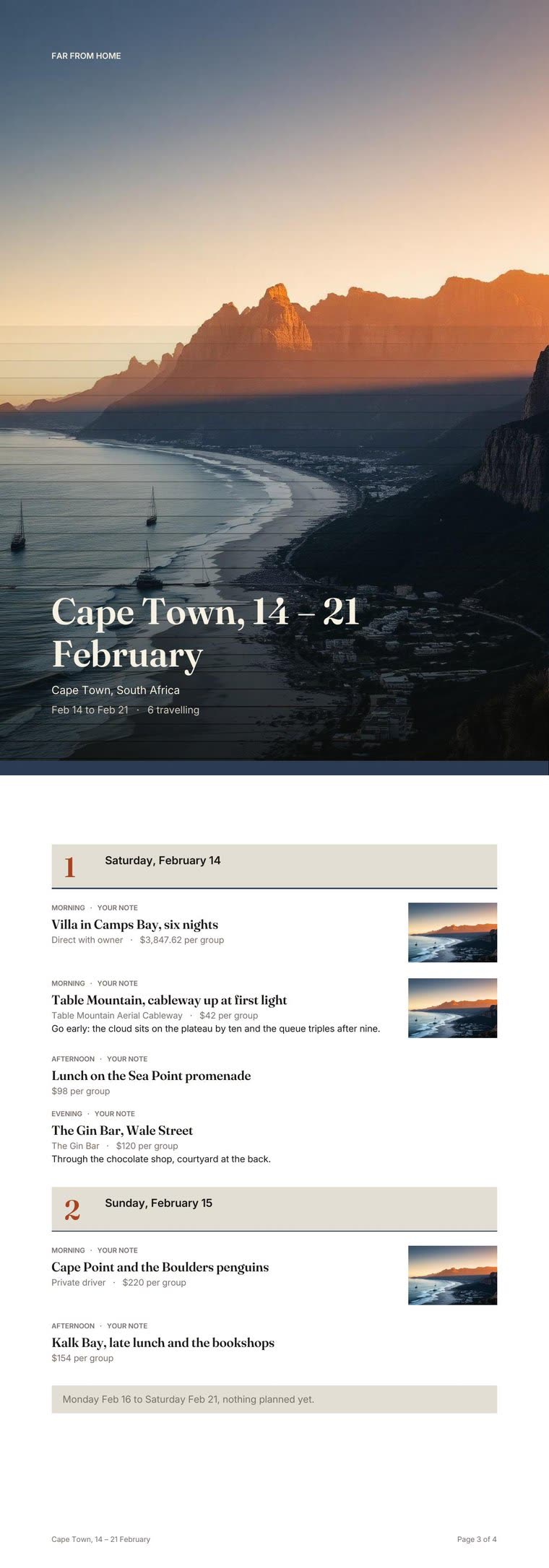
The trip, as a document you can hand someone.
A cover for the destination, then every day in order: the times, the vendor, the cost to the group, the crew's own notes, and a photograph beside each place. It is made from the live trip, so a snapshot taken today says what today says, and the earlier versions stay listed against the trip.
Nobody has to chase anybody.
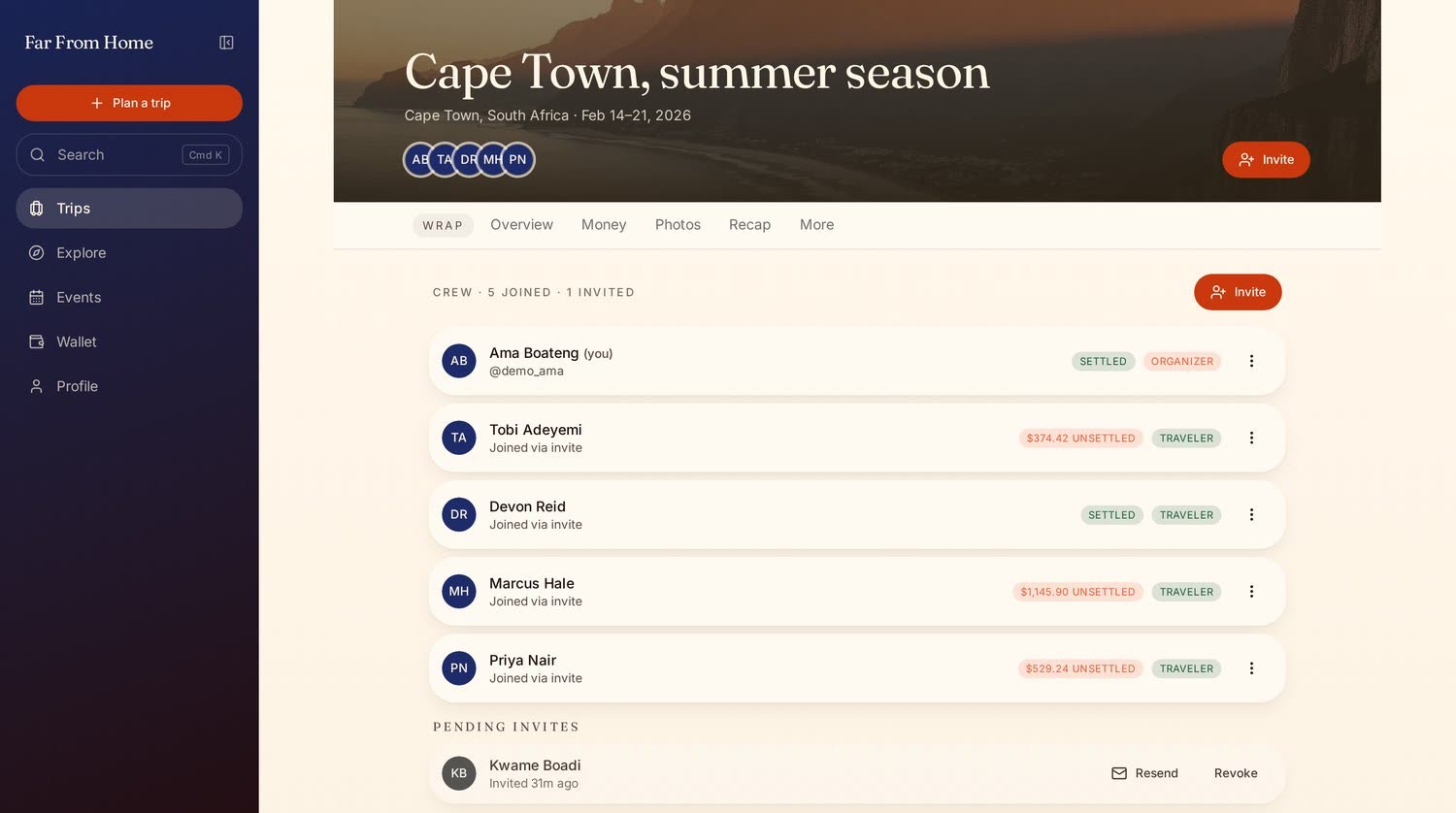
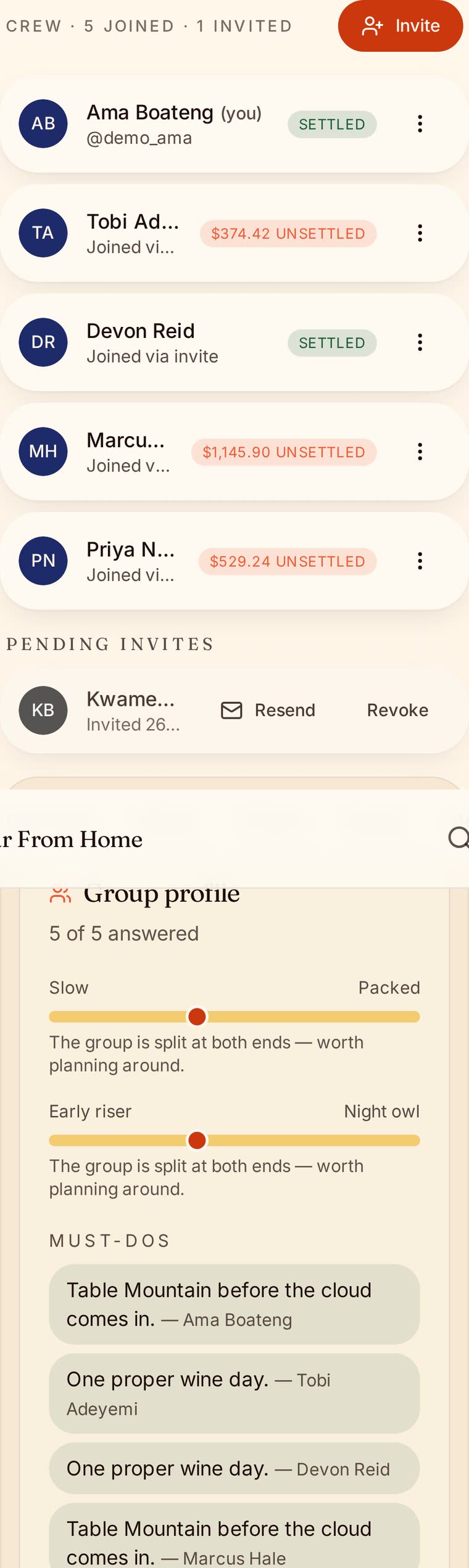
One link brings people in. The roster shows who has joined, who is still an invitation, who the organiser is, and what each person has confirmed. So the trip knows its own headcount without anyone taking a register.
How a place earns its spot
Sourced, listed, checked, placed.
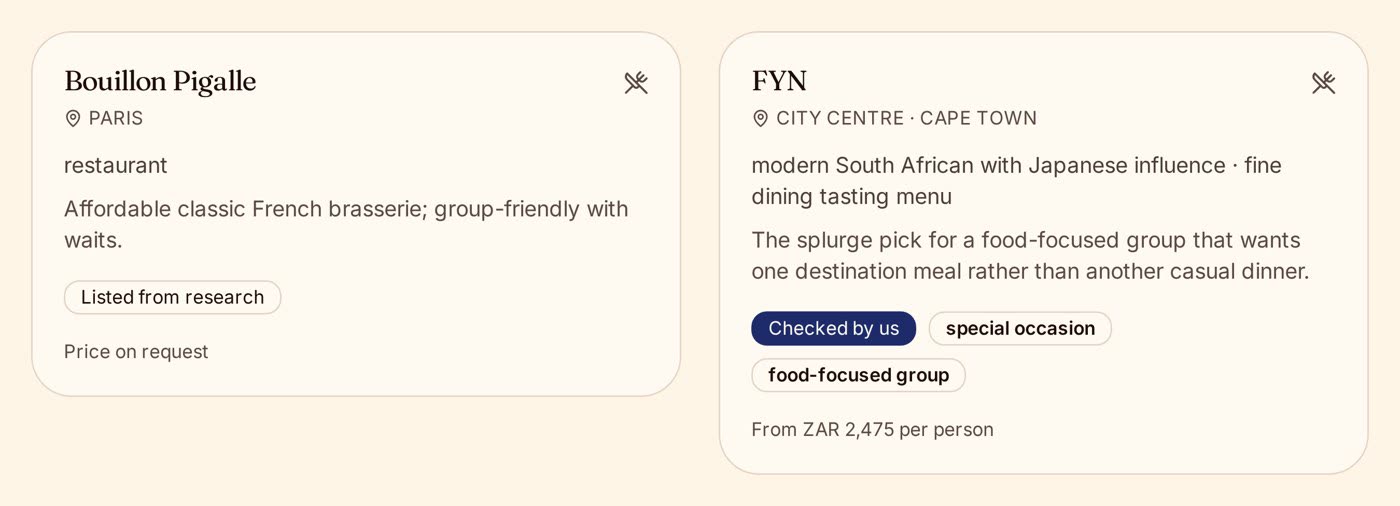
Everything researched is browsable, and every place says which it is: listed from public research, or checked by hand with a date on it. The checking happens one place at a time rather than in bulk. That is slower, and it is why the label sits on the card rather than being implied by the place being there at all.
Sourced
A person puts it forward.
With a reason attached. Not a scrape of a listings site.
Listed
It goes up as research.
Labelled as such, so you browse the whole city instead of a thin slice of it.
Checked
Somebody confirms it by hand.
Trading status, location, official link. Only then does it read as checked, with the date on it.
Placed
A planner puts it on a day.
At a time, next to the things around it.
The same catalogue, two labels
Real cards, taken from the live catalogue.

Timing and anchoring
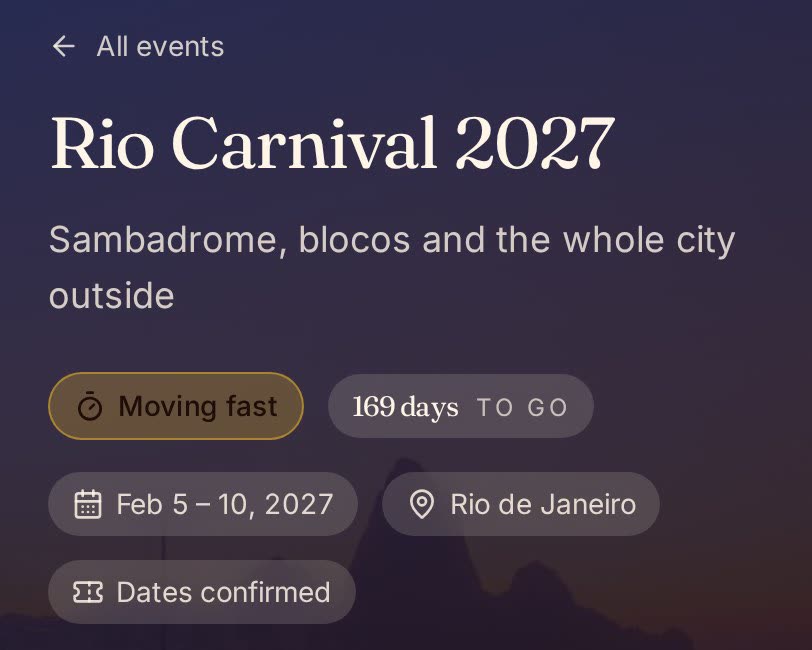
When the event fixes the dates, the planning is a countdown.
Every edition carries its own lead-time state (Book now, Moving fast, Next year) with the days to go and whether the dates are confirmed or still expected.
What stays private
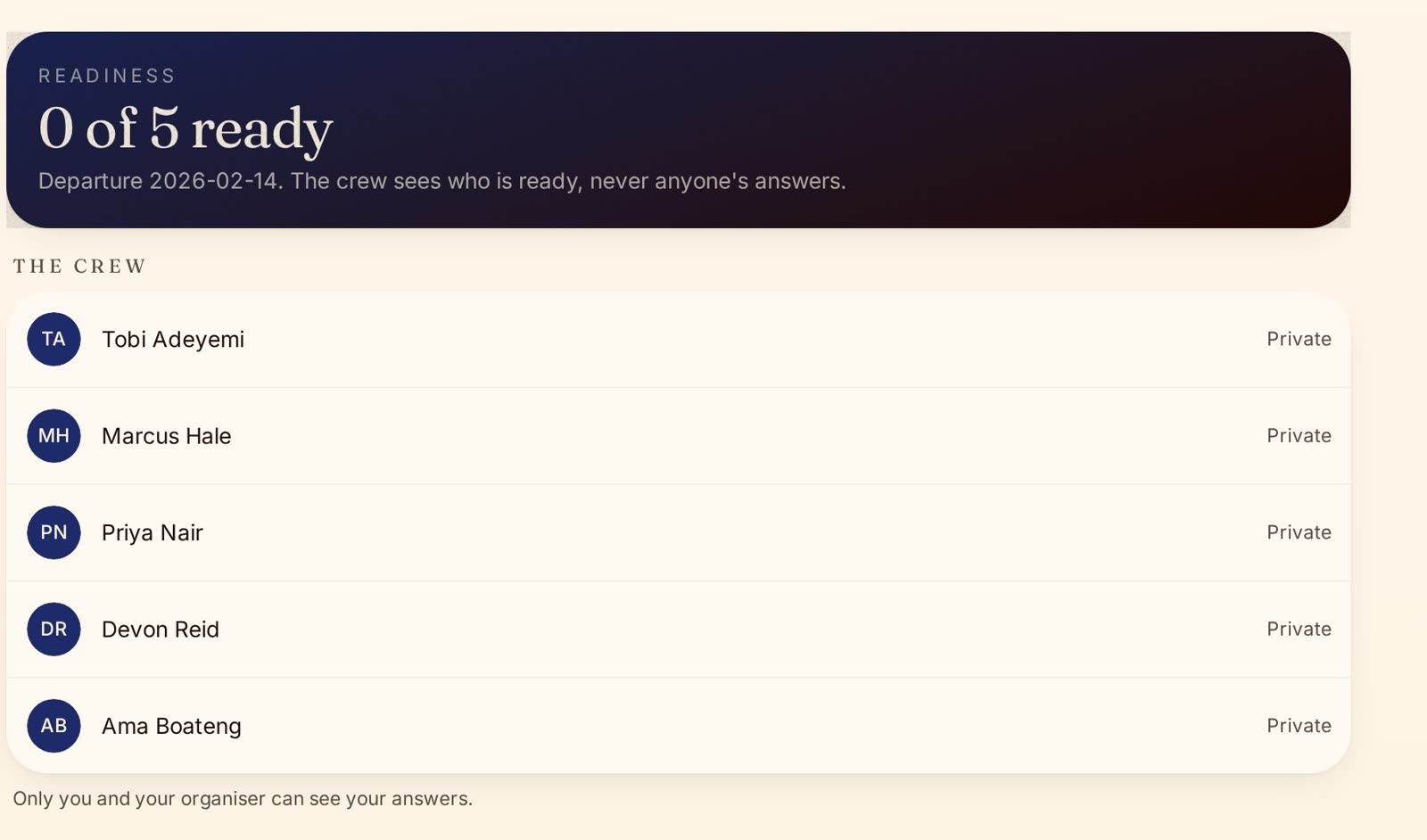
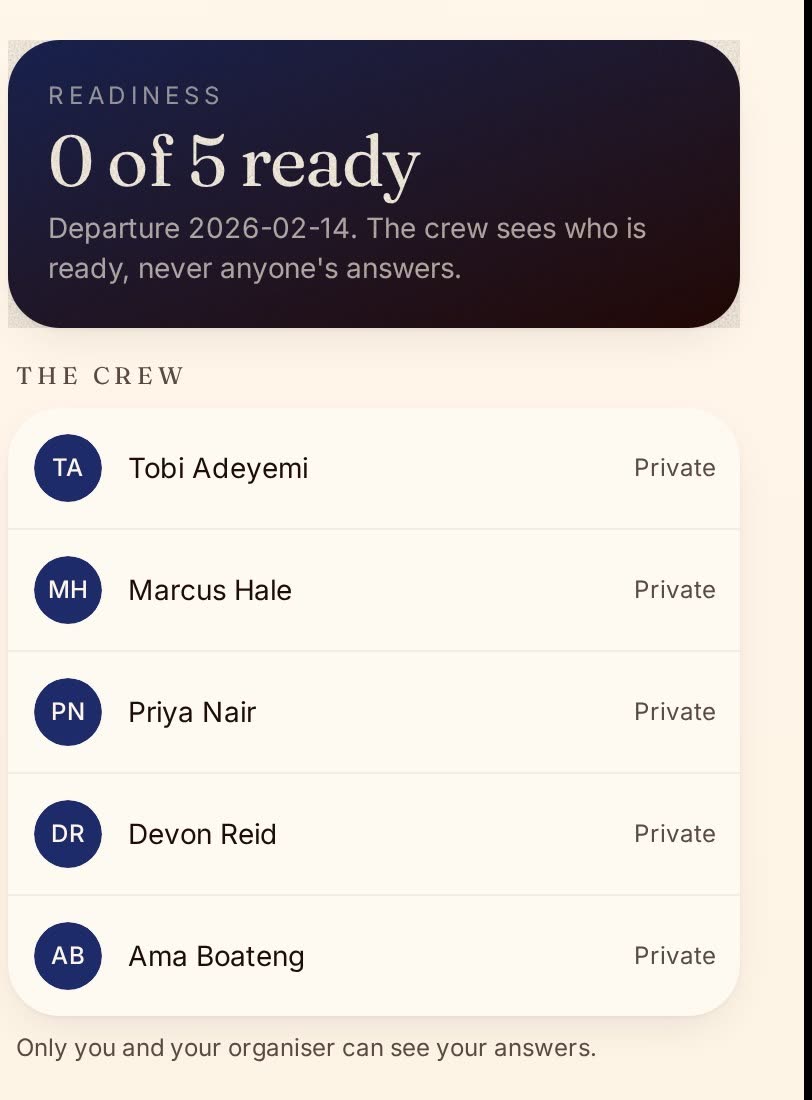
The crew sees who is ready. Never anyone's answers.
Dietary needs, access needs and what someone can actually afford are held apart from the trip. The board shows a readiness count and the word Private on every row.
Being there
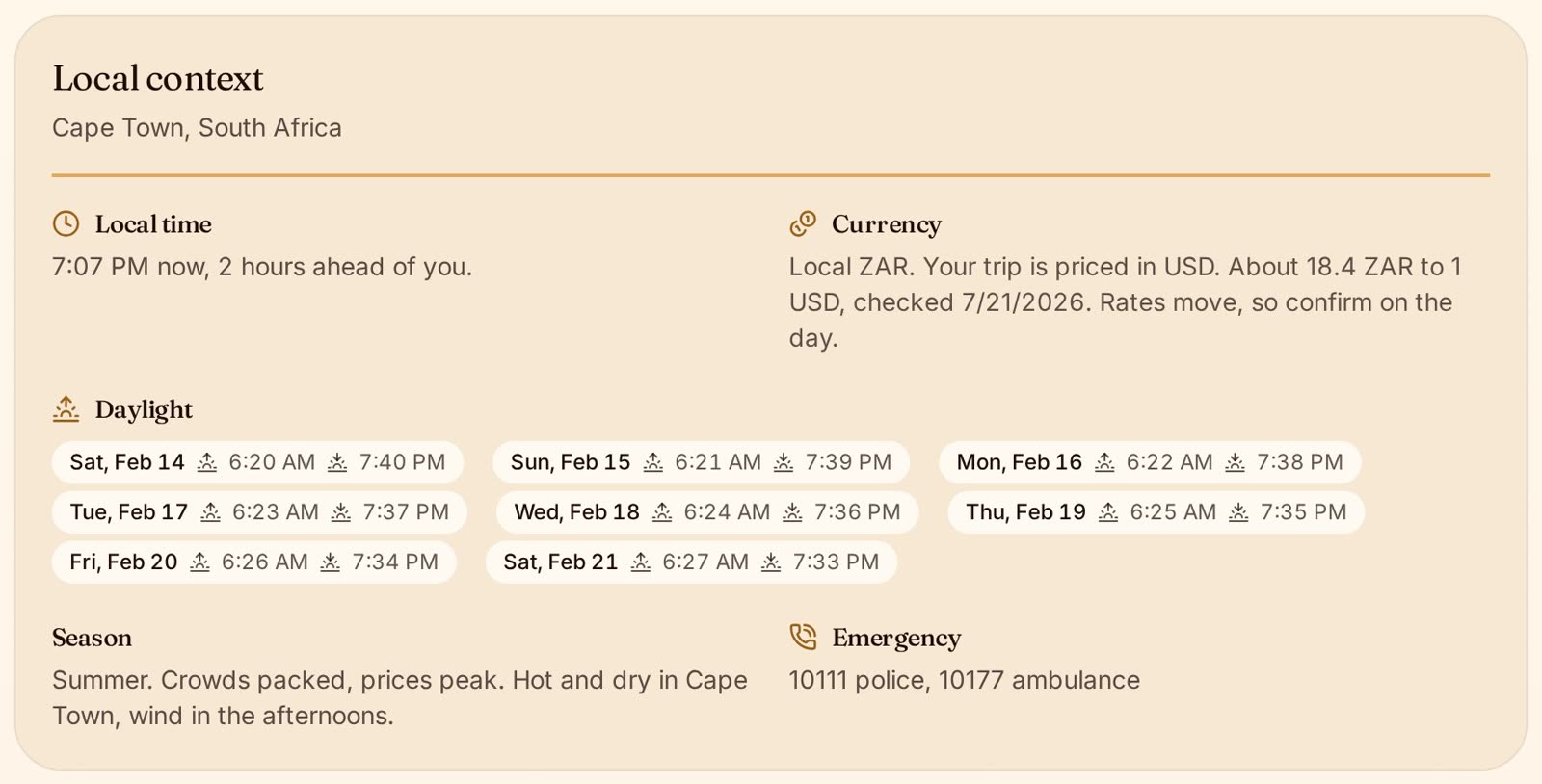
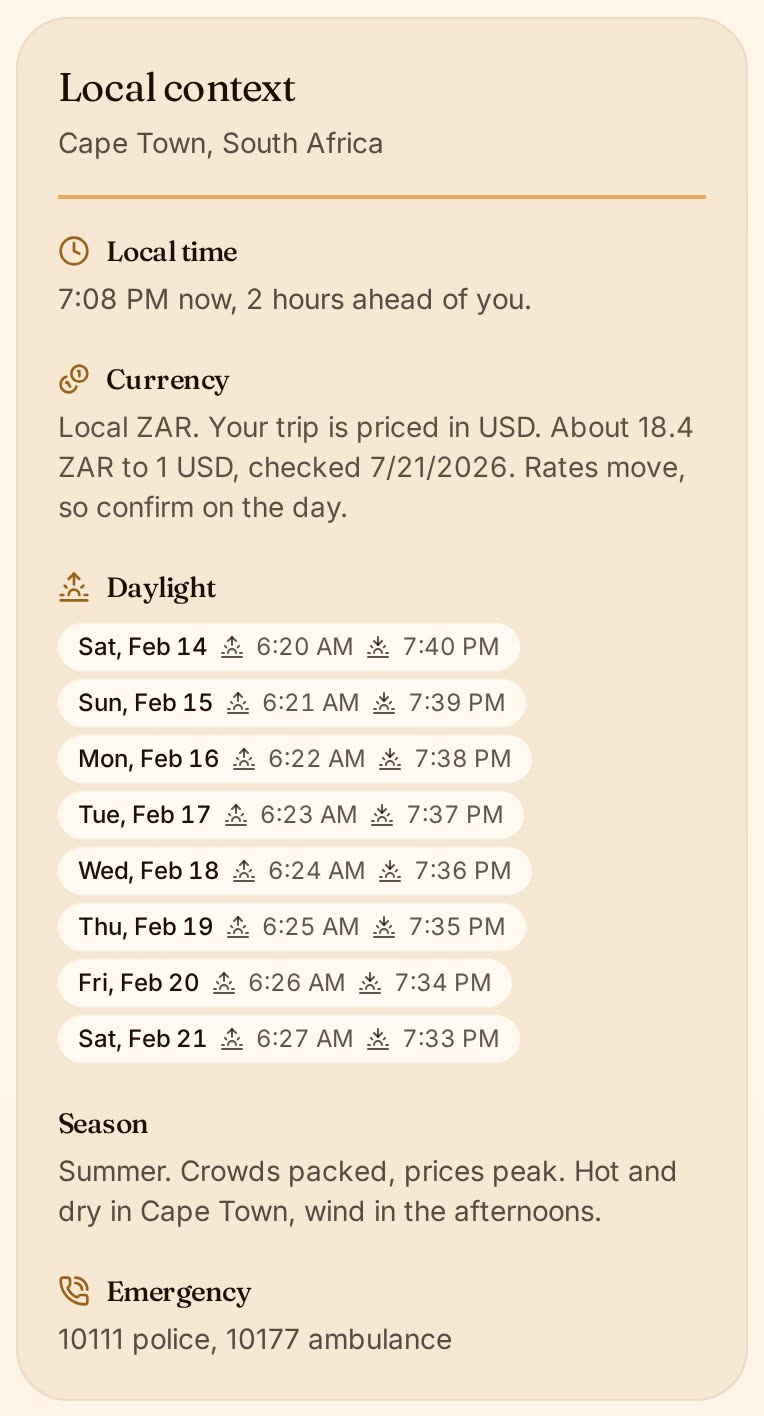
The clock, the rate and the light, for the days you are actually there.
Local time against yours, the exchange rate with the date it was checked, sunrise and sunset for every day of the trip, and the emergency numbers for the country.
What it costs
Plan one whole trip for free. Pay when you want it curated.
Crew Free is a real workspace: one private trip, one destination, up to four invited travellers, the itinerary yours to build and edit, one group decision, and one restaurant, one nightlife option and one excursion from our researched shortlist. Human curation, the full verified shortlist, a bigger crew, more than one trip, the delivered trip document and the shared-cost ledger come with Passport.
Paying is what brings us in: the days curated for you, the full shortlist for your destination, a bigger crew, the itinerary delivered as a document, and the money split and settled between everyone.